Beyond Words: Why Phrase- and Sentence-Level Work Matters
Content Columns
When we introduce a new concept, whether it’s a grapheme/phoneme correspondence, a morpheme, or an orthographic convention, we often default to word-level practice. In fact, it is tempting to make this our main focus.
There are so many reasons why we get stuck at the word level:
- My time is limited – I just don’t have time to do it all
- My students don’t have the stamina for phrases or sentences
- My lessons become too long, and it is hard to keep students’ attention past word-level activities
- Word-level games are easy to create – phrases and sentences, not so much
It is true that finding time will always be a challenge, and stamina does need to be built.
Phrase- and sentence-level work, however, is very important for students. Spending a bit less time at the word level and adding time at the phrase and sentence level can pay off. Let’s explore the benefits of working at these levels, along with some easy-to-prep games and activities for consolidation.
Content
Phrase-Level Work
Phrase-level work is an important stepping stone for students.
Working at the phrase level:
- Builds confidence
- Supports fluency
- Lays the foundation for an understanding of syntactic knowledge and grammar
- Supports verbal reasoning
- Provides opportunities for additional practice of irregular words
Let’s take a deeper look at each of these.
Content Columns
Working with phrases builds confidence
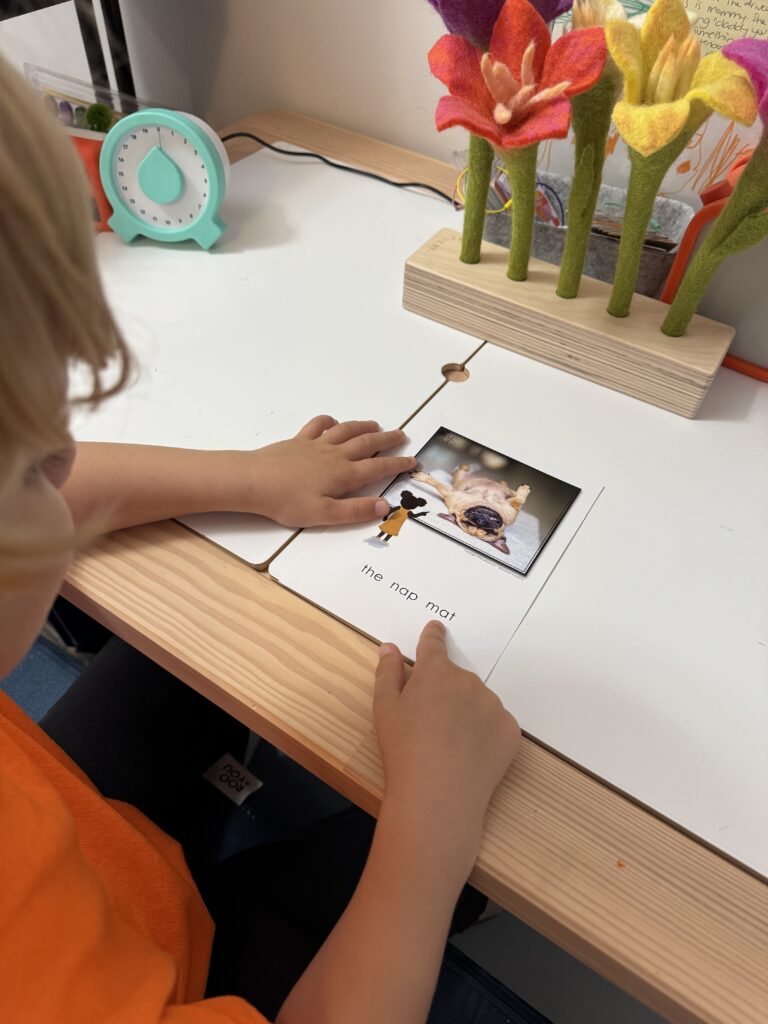
For some young readers, the jump from words to sentences in books can feel a bit overwhelming. Because phrases can be short (e.g., Jack), medium (e.g., his dog), or long (e.g., the big red fox), they are a great way to scaffold confidence and slowly build a child’s stamina by reaching longer strings of text.
Working with phrases supports fluency
Fluent reading doesn’t develop overnight. Working with phrases is a great stepping stone to fluent reading. Readers need to practice putting more than one word together when they read so that their reading sounds more like talking. In authentic text, they will encounter sentences made up of more than one phrase, so practicing phrases early can prepare students for this.
Working with phrases lays the foundation for an understanding of syntactic knowledge and grammar
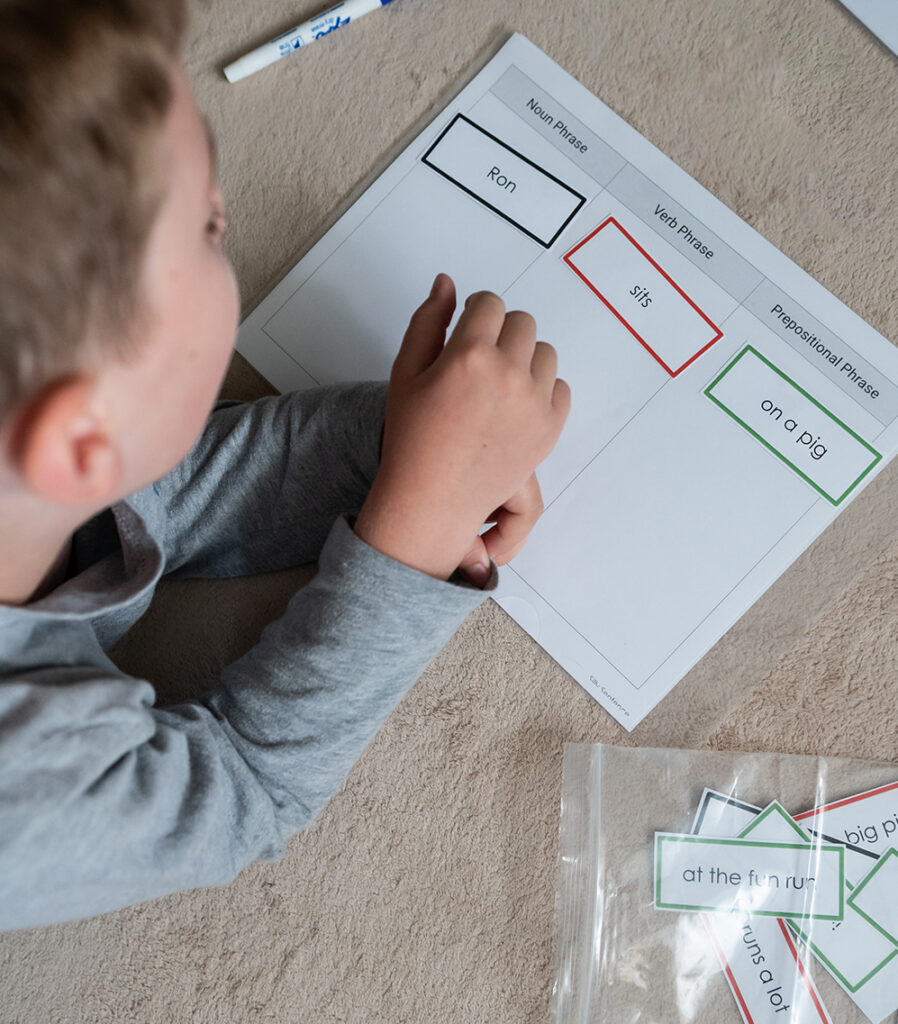
As students learn about the parts of speech, they can learn about the difference between noun phrases, verb phrases, and prepositional phrases. Practicing these phrase types in isolation can make them easier to identify in text and support comprehension.
Content
Working with phrases supports verbal reasoning
Students can explore metaphors, idioms, and other examples of figurative language through phrases. Exploring and discussing phrases like “a heart of gold” and “under the weather” can help students recognize and understand figurative language in more complex sentences.
Working with phrases provides opportunities for additional practice of irregular words
Many irregular words are also content words and, as such, aren’t easy to define out of context. Adding them to phrases gives students more meaningful exposure and can help them understand where and how they are used.
Content
So What Exactly is a Phrase?
If you are anything like me, grammar isn’t your biggest strength. I must have been taught grammar at some point in my educational career (one would think); however, I remember very little of it.
When I started my Orton-Gillingham Practicum and was introduced to using phrases in lessons, I felt a little nervous about getting it right. As it turns out, it is a bit more intuitive than you might think. Here are 3 key points that helped my understanding:
- A phrase can be a word or a group of words
- A phrase functions as a unit – it represents a part of speech (e.g., a noun, verb, preposition)
- A phrase never contains both a subject (a noun or a pronoun that performs the verb) and a predicate (the verb plus additional information)
Let’s look at 3 different types of phrases. These are the three I used most in my lessons.
Noun Phrases
Nouns name people, places, things, feelings, or ideas.
A noun phrase is a word or group of words that functions as a noun.
Key Considerations:
- Noun phrases can contain more than one noun (e.g., Sam and Dot)
- Noun phrases may have a determiner (e.g., this man, his cat)
- Noun phrases might have an adjective (e.g., a red box, my old hat)
Verb Phrases
Verbs express actions, states of being, and states of having.
A verb phrase consists of a main verb, or a main verb plus any auxiliary verbs (e.g., be, do, have, etc.) or modal verbs (e.g., can, may, will, shall, must).
Key Considerations:
- Verb phrases can be simple (e.g., walking) or complex (e.g., will be walking)
- Verb phrases may include an adverb (e.g., walked quickly)
- Verb phrases may include a conjunction (e.g., ran and jumped)
Prepositional Phrases
Prepositions show relationships between a noun and other parts of a sentence. They tell where or when something happens.
A prepositional phrase contains a preposition, an object, and any words that might modify the object (e.g., an adjective).
Key Considerations:
- Prepositional phrases that modify nouns are called adjectival (e.g., the house by the lake)
- Prepositional phrases that modify verbs are adverbial (e.g., go shopping at the mall)
Content
Dig In, and Have Fun!
Now that we’ve covered all the dry content, let’s have some fun with phrases!
Remember that working with phrases serves multiple purposes. We’ve mentioned quite a few already, but don’t forget we are also practicing whatever core concept we’ve just taught.
Here is an example for a lesson that has introduced <th>/th/.

Content Columns
Silly Sentences
Students love making silly sentences with phrases. Simply cut up the phrases and have students rearrange them to make a silly sentence. From the example above, a student could create the following silly sentences:
- A dog and a moth did some math on a thin log.
- The thin cat had a bath next to the path.
- A red moth is running with a cloth.
- A thick red mat had a bath with a cloth.
I’ve done this activity with many students, and I often find they are so focused on making silly sentences that they don’t even notice how much they have read!
An editable template for this game can be found here.
Content Columns
Headbands
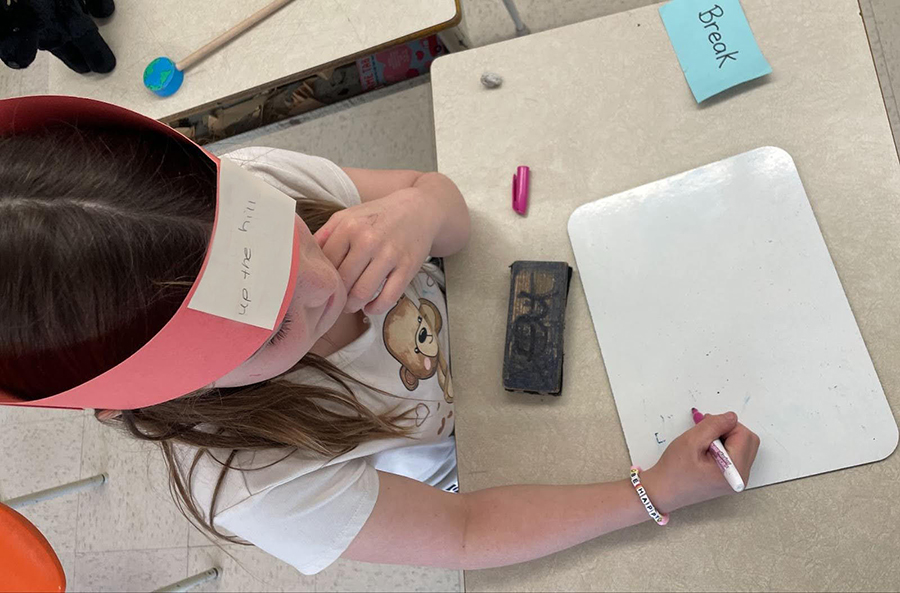
Playing headbands with phrases is fun and takes little prep. Cut up your phrases and clip one to a cardstock headband with a paper clip. One player wears the headband, and their partner reads the phrase. The player writes the phrase and spells the words, with their partner checking for accuracy. Students can then trade roles.
Content Columns
Reading and Spelling Game Adaptations
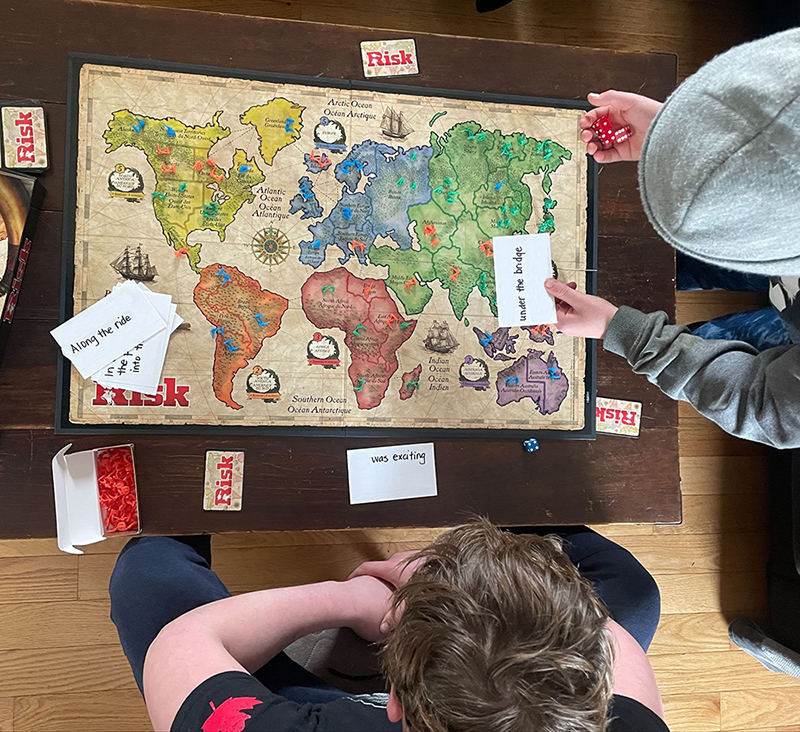
You can turn any game into a literacy game with a small tweak. Cut out your phrases and stack them face down on the table. Students read or write a phrase (read by a partner) before they make their move on the game board.
The example to the right shows older students playing Risk, but you can do the same with games like Candyland or Snakes and Ladders.
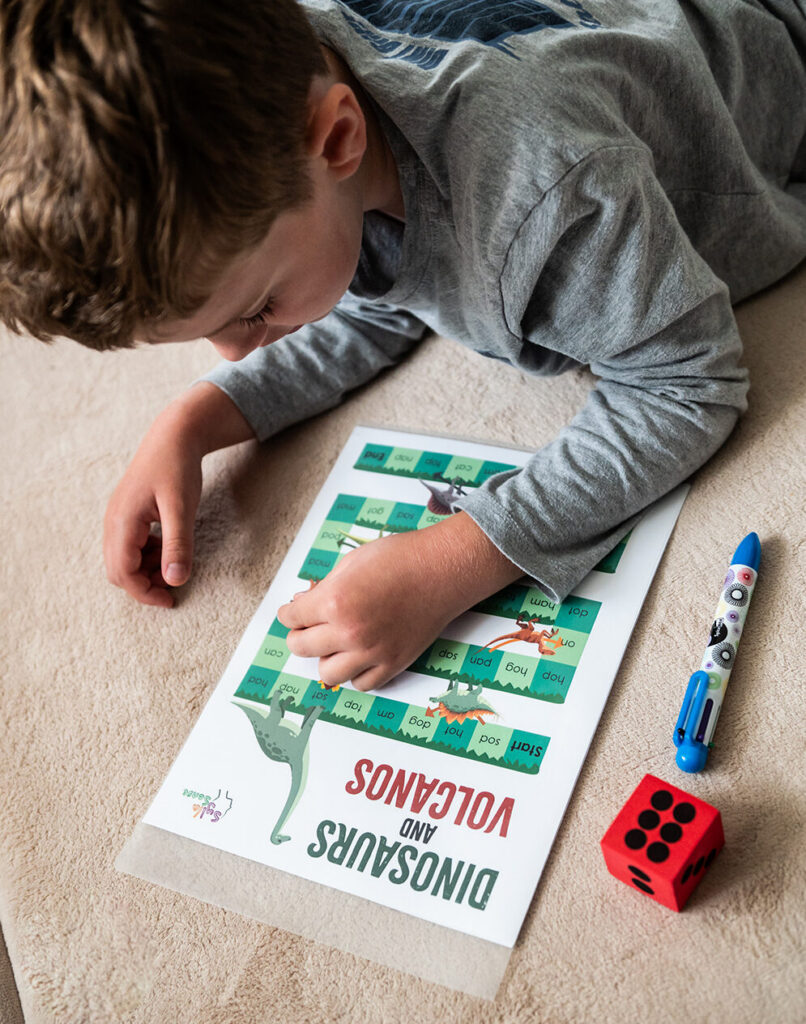
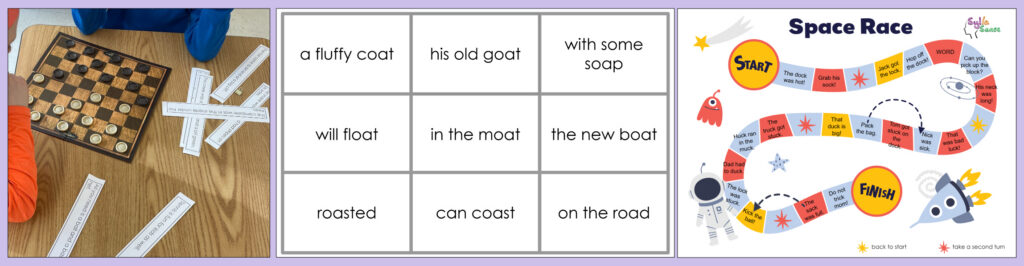
SyllaSense also offers a wide variety of editable games where you can add phrases. You can play these as a whole group by projecting them on a whiteboard, or print them and use them in small groups or as take-home activities.
You can find our game boards in this Google Folder. Please make a copy of the document you wish to use and save it to your own drive. You can then edit it as you see fit. Reach out to us if you have any difficulties.
Content Columns

Hidden Picture
This activity is created with Google Slides. Here is a copy of the template, which includes full instructions. Simply make the background of the slide a fun picture – it could be something silly, a picture of a student’s work, or something relevant to classroom studies. Edit each square and add a phrase.
Content
Sentence-Level Work
Sentence-level work builds on many of the same skills as phrase-level work. It also helps students build stamina and develop flexible decoding skills.
As they progress, students need to develop flexible decoding skills. They need to use their decoding skills to get them most of the way there, and then “flex” a word while thinking about what makes sense. This flexibility matters because English is peppered with stress, schwa, irregular words, and heteronyms that can only be read properly in context.
Sentence-level work can help with this, especially as sentences get longer and you can glean more context from the text.
Students can also learn about sentence types and, as such, can use this understanding to support the reading of longer texts:
- Simple sentences: declarative (e.g., The cat slept in the sun.)
- Simple sentences: imperative (e.g., Please line up at the sink.)
- Simple sentences: interrogative (e.g., Did you bring your mittens today?)
- Simple sentences: exclamatory (e.g., I can’t wait for recess today!)
- Compound sentences (e.g., I like to read, and my sister enjoys puzzles.)
As with phrases, working with sentences serves multiple purposes. Students build stamina, learn about sentence type and structure, and practice flexible decoding. They are also practicing the core concept that you have just taught.
Here is an example from a lesson that introduces <ow>/ō/:

Notice the opportunity for flexible decoding built in.
- Is it “wĭnd” or “wīnd”? How do you know?
- Is it PROject or proJECT (stress on the first syllable or on the second syllable)? How do you know?
This set of sentences demonstrates how sentence-level work can help students develop many different skills.
Content
Make it Fun!
Except for “Silly Sentences,” all the games and activities listed in the phrase-level section can be modified to use sentences.
Content
While word-level work matters, phrase- and sentence-level work definitely brings a lot to the table.
At the beginning of this blog, I mentioned that one reason it’s easy to skip phrase- and sentence-level work is that our students don’t have the stamina. Truth be told, the best way to build stamina is to practice with increasingly longer strings of text. Consider the following phrases:
- A cat
- His black cat
- The black fluffy cat
- Patty’s big black fluffy cat
Start small, and build. You would be amazed at how quickly stamina can grow. As stamina grows and confidence increases, speed will increase as well, and you will find you are getting through your lessons in less time.
Consider adding phrase and sentence-level activities to your daily literacy routine. We’d love to hear how it goes. Reach out to us on Instagram!
Content
 Lee-Ann Lear
Author and CCO, SyllaSense
OCT, A/OGA
lee-ann@syllasense.com